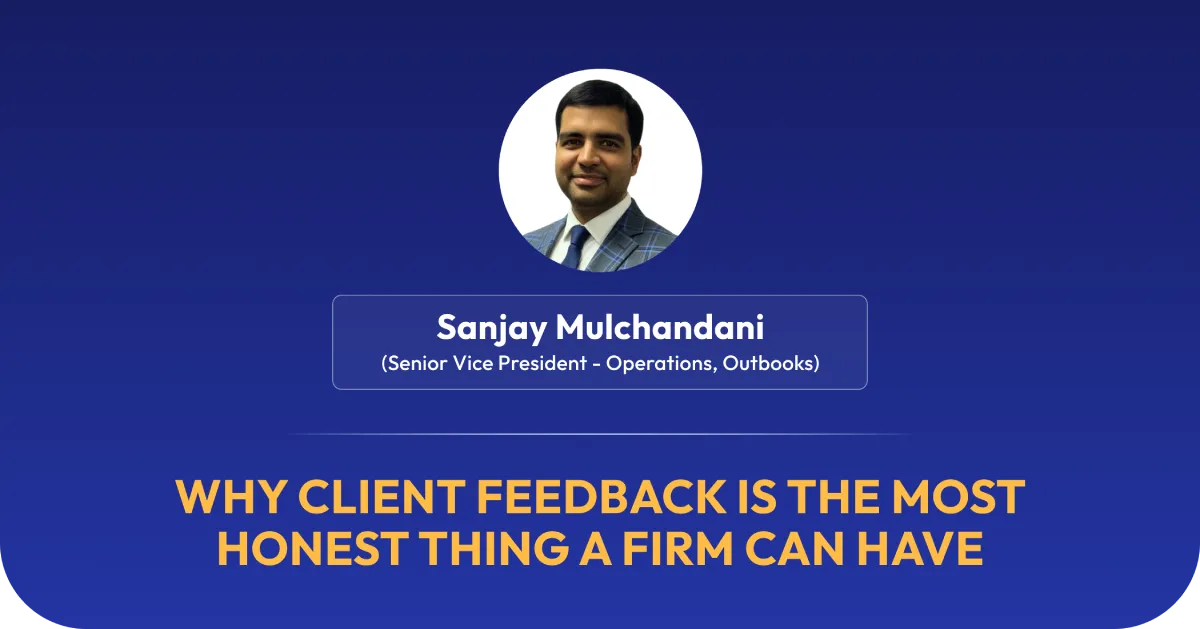

In most service businesses, feedback is something you collect at the end of a project, file away, and rarely act on. At Outbooks, we decided to change that.
We have introduced a quarterly client feedback process, a short survey sent directly
to the firms we work with, asking them to rate our performance over the past cycle.
It sounds simple, and it is. But the discipline of doing it consistently, and actually
reading the responses, has changed how we think about the work we deliver.
The honest truth is that internal reviews only tell you so much. You can review files,
check turnaround times, and tick all the right boxes and still miss something that
matters to the person on the other side. A client who feels unheard rarely complains
loudly. They just quietly start looking elsewhere.
The quarterly survey gives us a direct line to that feedback before it becomes a problem. It tells us where we are doing well, where we are falling short, and in some
cases, it tells us things we would never have thought to ask about.
For any firm serious about quality, I would say this: do not wait for a client to raise an issue. Build the mechanism that makes it easy for them to tell you. That is the only way to keep improving.

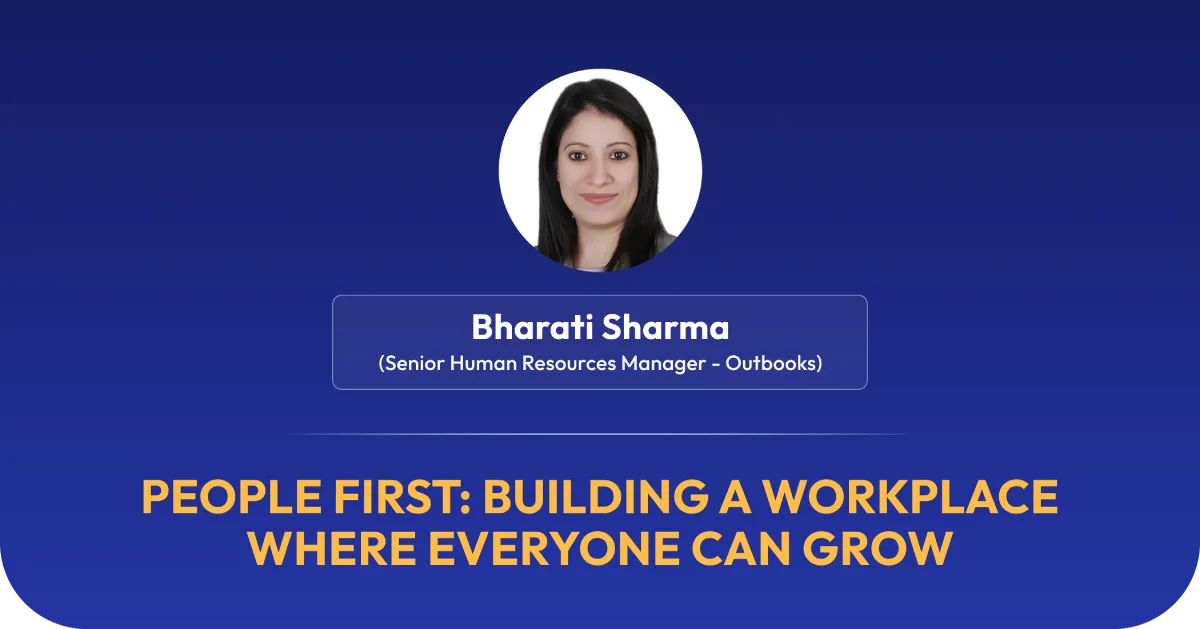
At Outbooks, we have always believed that the quality of work we deliver is
directly connected to the wellbeing of the people delivering it.
This is reflected in how we operate day to day, from lower attrition in key teams
to stronger client continuity and more consistent delivery outcomes.
Over the past year, we have been focusing on creating an environment where
every team member feels supported, heard and valued. This means building
clearer growth paths so people know where they are headed, creating space for
open conversations between managers and their teams, and making sure that
recognition is not just reserved for big milestones but also for the everyday effort
that keeps things running.
One thing we have been particularly mindful of is the pressure that comes with a
growing organisation. As we scale, it becomes even more important to ensure
that no one feels overwhelmed in the process.
Whether it is through structured check-ins, cross-team collaboration, or simply
making it easier for people to raise concerns, we want every individual at
Outbooks to feel that they have a place here and that their growth matters to us.
We are a team of 500+ people spread across locations, but our goal is to make
sure every employee feels supported and heard. Because when people feel
genuinely supported, the quality of work improves naturally.

1. Making Tax Digital (MTD) for Income Tax
From 6 April 2026, MTD for Income Tax becomes mandatory for sole traders and landlords with qualifying income above £50,000, marking the first phase of HMRC’s rollout for taxpayers in scope.
2. Cloud Accounting Is Now the Baseline
Cloud accounting is now the default operating model for many UK firms, with industry reporting showing strong cloud and hybrid adoption across the profession. The key value is no longer just convenience, but faster access to data, better collaboration, and more flexible working.
3. AI Adoption Is Rising, Along with Risk Awareness
AI use in UK accounting is expanding quickly, and firms are increasingly
weighing the benefits against concerns around data quality, privacy, and staff capability. The firms that pair AI adoption with training and governance are likely to get the strongest gains.
4. Advisory Services Are Moving to the Centre
As automation takes over more routine compliance work, advisory services are becoming a bigger part of the accountant’s value proposition. Industry reporting shows that many firms already offer advisory support, and a significant share plan to expand it further.
5. Corporation Tax Penalties Have Increased
From 1 April 2026, HMRC doubled fixed late filing penalties for Corporation Tax returns, so even a return filed one day late can now trigger a £200 penalty. This makes deadline tracking more important than ever for firms and their clients.
6. M&A Activity Remains Strong
UK accounting practice M&A remains active in 2026, with elevated valuations still being seen for firms that have invested in technology, recurring revenue, and MTD readiness. The market is active enough that 2026 is widely viewed as a critical year for firms considering a sale or acquisition.

1. Skills Mapping & Training
We have implemented a structured competency framework that maps the skill sets of every team member across the organisation. This allows us to identify gaps proactively, target training where it is needed most, and ensure that when a new requirement arises, we already know exactly who internally is best placed to handle it.
2. Cross-Training Across Departments
We have launched a cross-departmental training programme in which team members are gaining skills from disciplines beyond their own. A bookkeeper, for instance, may now receive training in personal tax or year-end work and vice versa. This investment in cross-skilling builds internal resilience, ensuring that should any department face a sudden surge in workload, we can respond pswiftly without compromising on quality or turnaround times.
Coming Soon - A Smarter Way to Handle Bookkeeping
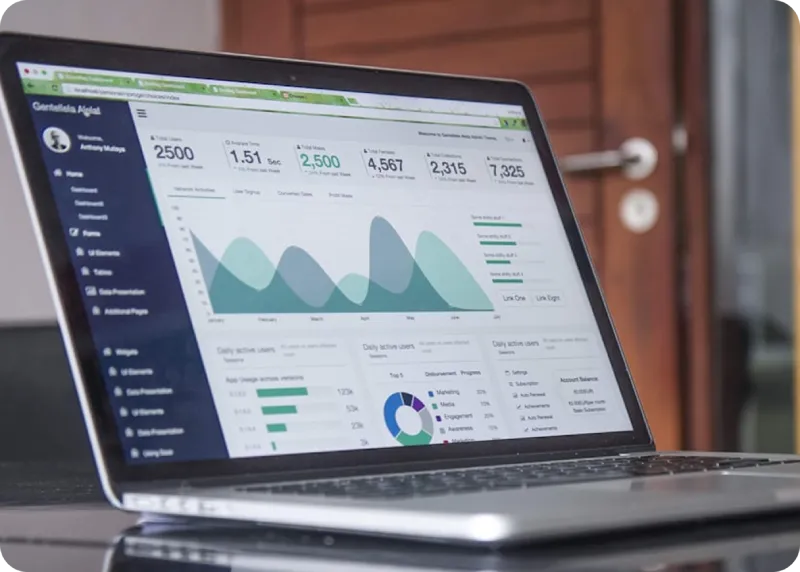
Accountants and bookkeepers today typically rely on a fragmented set of tools for data capturing, transaction processing, reviewing and
payments, each carrying its own learning curve, cost, and limitations.
We are building a platform that consolidates these functions into one
cohesive workflow. The aim is straightforward: fewer systems, greater
consistency, and a more accurate bookkeeping process from end to end. The platform is in active development and will be introduced in phases over the coming months.

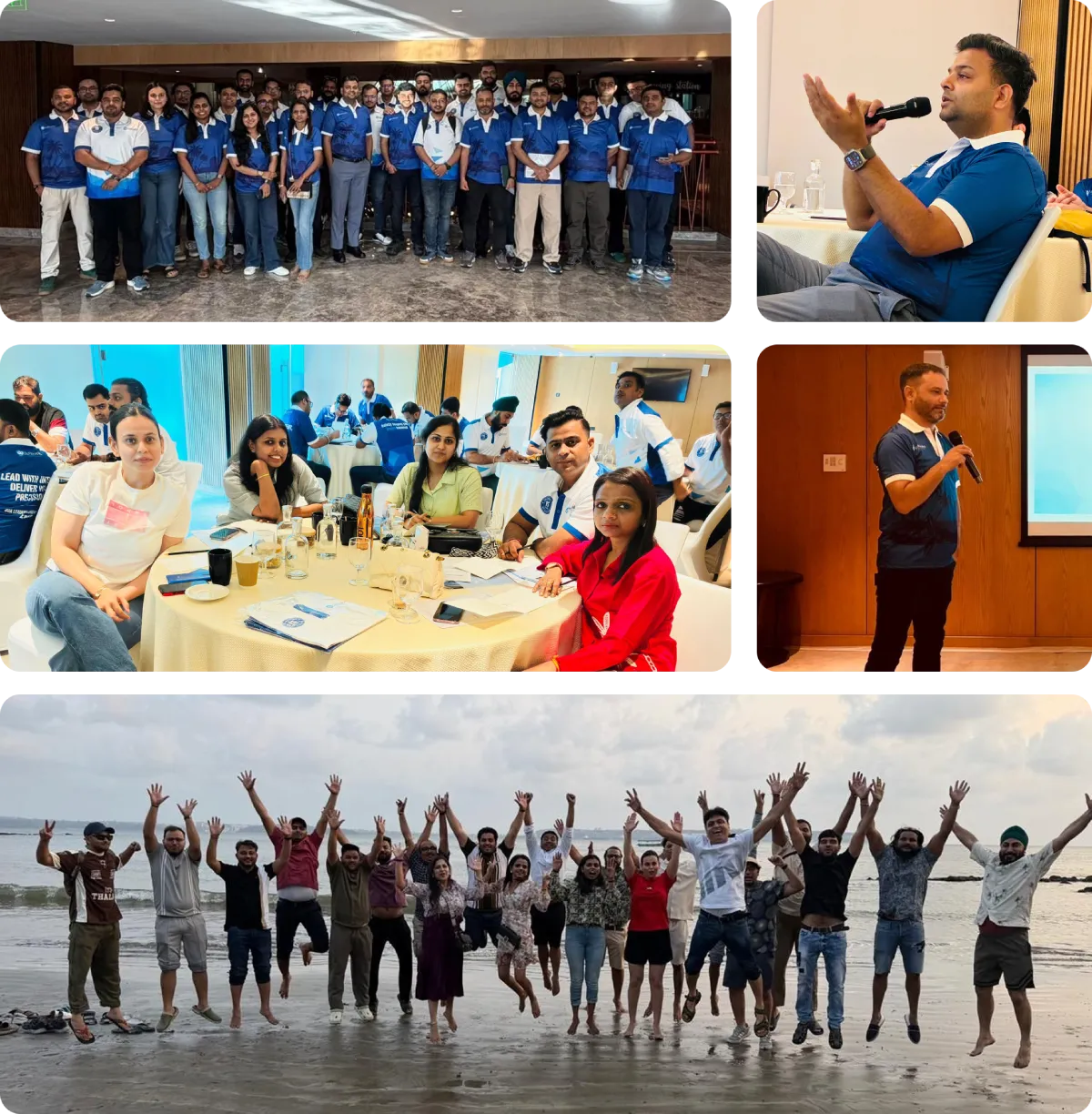
We recently wrapped up our Annual Leaders Conference 2026, bringing our leadership team together in Goa for three days of focused conversation and planning. The conference covered the processes we are building internally, what the year ahead looks like for Outbooks, and how AI is shaping the way our work gets done. It was a valuable opportunity to step back from the dayto-day, align on priorities, and think clearly about where we are headed as a company. 2026 is looking exciting and the groundwork has been laid to make it our strongest year yet.

Sanjay Mulchandani
Senior Vice President - Operations

We are delighted to welcome Sanjay Mulchandani FCCA to Outbooks as Senior Vice President of Operations.
Sanjay brings 12+ years of experience in the UK outsourcing sector, managing large
teams, building strong client relationships, and developing expertise across
compliance, bookkeeping, payroll, taxation and business restructuring.
What stands out about Sanjay is his belief that a business grows best when the people within it grow too. He joins Outbooks with a focus on building a team where everyone learns, contributes and feels valued.

-Sam Elliott Brown
I've been impressed with your work, and really appreciate how organised
and communicative you guys are throughout each month.
It's also commendable that you bring new ideas to the table to improve
processes, it shows how you approach the work with a strong sense of
ownership.
Because of this, we want to move you onto some of our bigger clients.
I'm confident you will look after them well.
-Peter Green
Couldn't be happier with the service so far. Communication has been
first class and all work has been prepared to a high standard. I would
highly recommend Outbooks.

Accountex London 2026
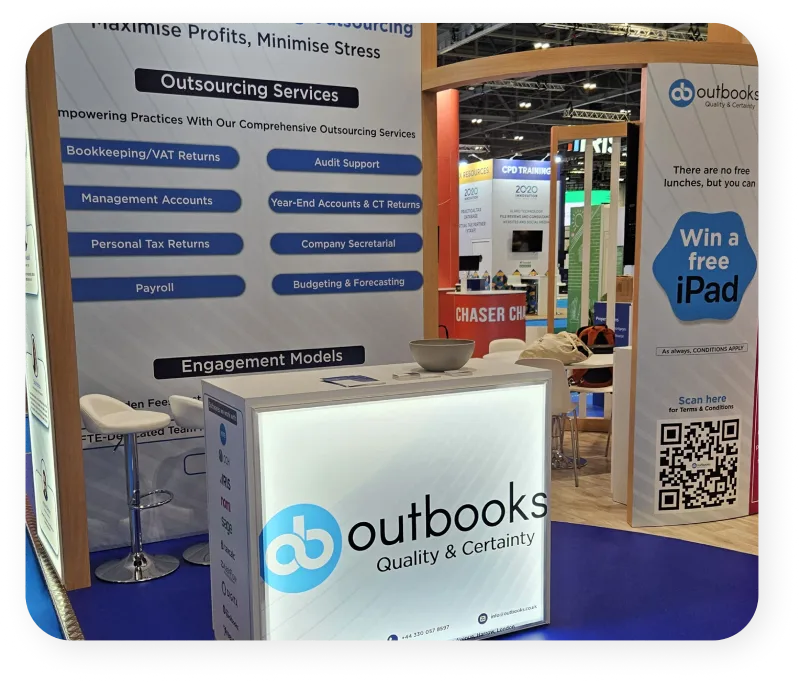
We were delighted to be part of
Accountex London this year - one of the UK's largest and most anticipated events in the accounting calendar. It was a great opportunity to connect with firms, explore the latest developments in accounting technology, and have meaningful conversations about the challenges and opportunities facing the profession today. If you visited our stand, it was great to meet you.
TAG Community Conference
We are looking forward to attending the TAG Community Conference. TAG brings together ambitious accounting firms from across the UK, and it is an event we always find genuinely valuable both for the conversations it sparks and the connections it builds. If you are attending, we would love to connect.

Chippy Mathew
Manager - Bookkeeping, Outbooks
1. How would you describe your journey at Outbooks so far?
I joined Outbooks as a Senior Bookkeeper, starting with just one client. Over time, that grew more clients, more responsibility, and after my first year, a promotion to Assistant Manager. That was when things really shifted. I went from doing the work to managing it building client relationships, training the team, and overseeing everything from onboarding through to delivery.
Recently, I was promoted to Manager. Three years in, and I can honestly say it has been one of the most rewarding professional experiences of my life. I came in very individually focused, and I leave each day thinking about the team.
2. Moving from Assistant Manager to Manager is a significant step.What has the transition taught you?
The biggest shift has been moving from doing to enabling. As an individual contributor, I measured myself by the quality of my own output. As a manager, my measure of success is whether my team is delivering well, growing, and feeling supported.
The groundwork I used to do myself the team is now doing and my job is to make sure there are no gaps, no blind spots, and that every person on the team has what they need to do their best work. It sounds simple, but making that mental shift takes time.
3. What is that one client interaction or relationship that has stayed with you?
One client stands out. She runs a publishing house, and from very early on, she asked for a 15 to 30 minute call every Friday something I do not do with any other client. She once said she would rather sort everything in one conversation than spend the week buried in emails. At first it felt like an unusual ask, but it changed everything. You start to understand the person, not just the account. You know when they are under pressure, when they need reassurance, and they in turn understand that you are human too.
Some clients escalate at the first sign of anything going wrong. With her,
there is always context and always understanding. That experience changed how I think about client communication entirely.
4. AI is reshaping bookkeeping rapidly. Where do you see the profession heading?
AI is already doing a lot of what we used to do manually, and that will only increase. But I do not think it signals the end of the profession I think it signals a change in what the profession requires. Someone still needs to sit behind the AI, give it the right inputs, and critically assess what comes out. AI works well within patterns. The moment something falls outside of that pattern, it can go wrong and with numbers, it can go very wrong. I have seen it hallucinate figures. That is why I always say to anyone coming into bookkeeping: get your basics strong first.
If you cannot judge whether the output is correct, you are not adding value and that is the only thing that separates you from the tool itself.
5. What do you enjoy when you are away from work?
I run a small home décor and floral arrangements business on the side. It started simply watching my mother tend to her garden, bringing flowers indoors, and people around me saying I should do something with it. So I did. Outside of that, I love reading particularly period dramas and travelling whenever I get the chance. It is important to have something that is entirely your own outside of work. It keeps you grounded.